
Introduction
There is a crab that the finest seafood markets in Hong Kong, Singapore, and Tokyo have always known by reputation and sought by the kilogram. A crab that commands premium prices at the most celebrated live-seafood restaurants across East Asia, that fills the export tanks at Karachi Fish Harbour destined for markets thousands of kilometres away, and that the domestic luxury table in Pakistan has, until now, rarely had the opportunity to experience at the standard it deserves.
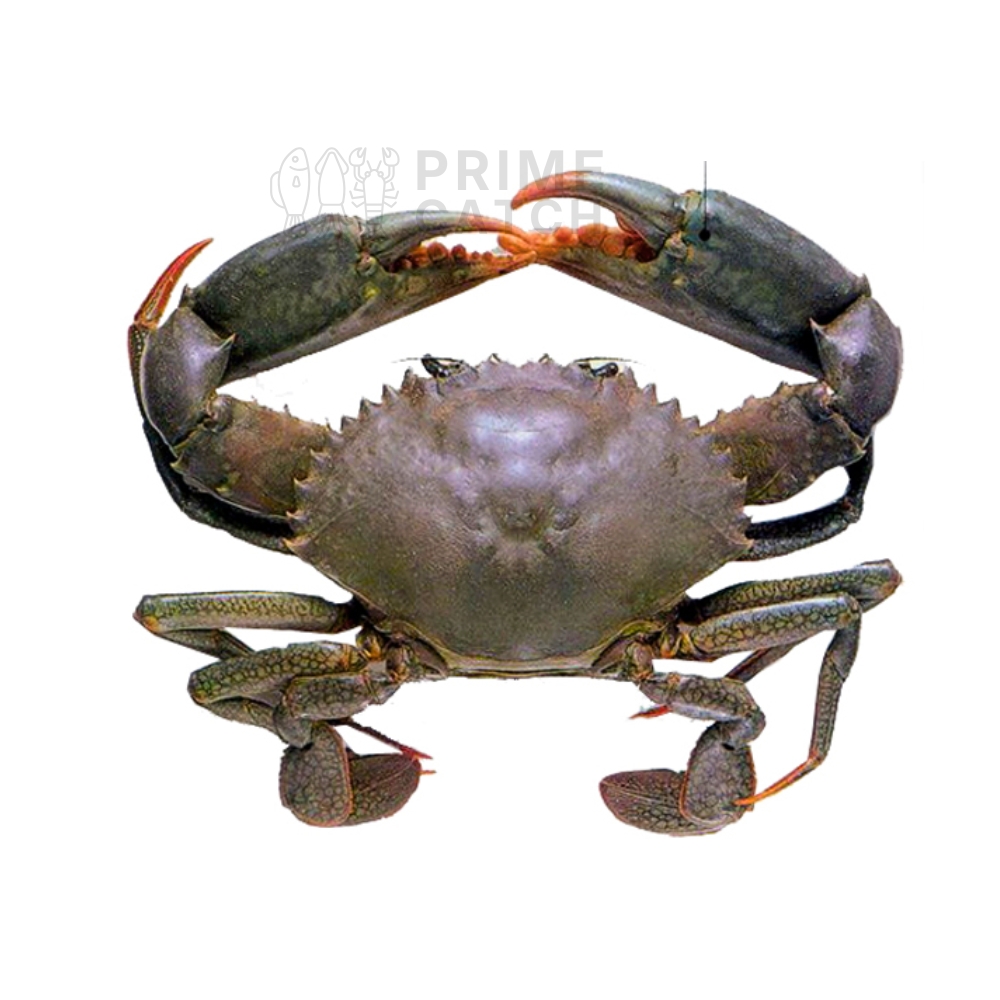
That crab is Scylla olivacea. The Orange Mud Crab.
At Prime Catch, we believe the finest product of the Arabian Sea belongs first on the tables of those who live beside it. Our Orange Mud Crab is wild-caught from the mangrove creek systems and tidal estuaries of the Sindh coastline, particularly the extraordinarily productive mangrove habitats of the Indus Delta, one of the most biologically rich intertidal ecosystems in the entire Indo-Pacific region. These crabs are landed fresh at Karachi Fish Harbour, handled without chemical treatment, and delivered to our clients in the condition this species demands: alive to the moment of preparation, with the full quality of flavour and texture that only absolute freshness can deliver.
Every crab we offer is approximately 400 grams, a size selected for the balance it represents between generous, accessible individual portions and the concentrated, intensely sweet flavour that characterises a well-nourished specimen from a productive natural mangrove habitat. At this weight, a single Orange Mud Crab is a complete and wholly satisfying individual portion, generous enough to anchor a composed main course or command the centre of a shared seafood platter.
This is the crab the world pays a premium for. Prime Catch brings it to your table.
Flavour Profile
The Orange Mud Crab delivers a flavour experience that places it among the finest crustaceans available anywhere in the world, and its reputation in the East Asian luxury seafood market is built entirely on the quality of that experience.
The meat is sweet, clean, and richly oceanic in a way that is immediately distinguishable from the blander, less complex flavour of farmed or chemically treated crab. Wild-caught specimens from the mangrove estuaries of the Sindh coastline feed on a varied natural diet of organic matter, small crustaceans, molluscs, and invertebrates in the nutrient-rich, tannin-stained waters of the Indus Delta, and the result of that diet is a meat of considerable complexity: a forward sweetness, a deep savoury mid-palate, and a long, clean, unmistakably marine finish that lingers pleasantly and demands nothing more from the cook than the confidence to leave it alone.
The body meat, extracted from the main carapace cavity, is the richest and most flavourful section: dense, moist, and carrying the concentrated sweetness that defines this species at its finest. The claw meat is firmer and more structured, with a slightly more assertive savouriness that makes it the preferred section for those who enjoy a more textured eating experience. The walking leg meat, more delicate and lightly sweet, is the most yielding of the three.
The hepatopancreas, the rich, golden-green organ found within the carapace cavity and known in various culinary traditions as crab butter, crab mustard, or simply as the most prized part of the whole animal, is intensely flavoured and deeply savoury. In the finest East Asian and European preparations, it is used to enrich sauces, dress the steamed meat, or consumed directly as a delicacy of considerable distinction.
The Orange Mud Crab is not a subtle flavour. It is a confident, full, deeply satisfying crustacean experience, and it rewards the finest possible accompaniments and the most careful possible preparation.
Habitat
Scylla olivacea is distributed across the mangrove areas and coastal intertidal zones of the Indo-West Pacific, with a range extending from the mangrove coastlines of Pakistan and India through Southeast Asia to Japan and northern Australia. In Pakistan, the species is most densely associated with the extraordinary mangrove ecosystem of the Indus Delta, one of the largest mangrove forests in the world and one of the most biologically productive intertidal habitats in the entire Indo-Pacific.
The Orange Mud Crab is a true mangrove species, spending the majority of its life in the tidal creek systems, mudflat environments, and brackish estuarine channels of the mangrove zone. It is an active, opportunistic predator, feeding on small fish, molluscs, crustaceans, and organic matter in the rich, silty shallows of its mangrove territory. This varied diet in the nutrient-dense, tannin-rich waters of the Indus Delta mangrove system is the direct source of the flavour complexity, meat density, and natural sweetness that distinguishes wild Arabian Sea specimens from aquaculture-raised alternatives.
The species is euryhaline, tolerating a wide range of salinities from fully marine to nearly fresh, which allows it to exploit the full range of tidal creek and estuarine habitats available within the mangrove system. Wild specimens are typically caught by artisanal fishermen using traditional crab traps and line gear in the mangrove waterways of the Sindh coastline.
Taxonomy
| Classification Level | Detail |
|---|---|
| FAO Name | Orange Mud Crab |
| Scientific Name | Scylla olivacea (Herbst, 1796) |
| Common Names | Orange Mud Crab, Mangrove Crab, Wenlock Red |
| Phylum | Arthropoda |
| Subphylum | Crustacea |
| Class | Malacostraca |
| Order | Decapoda |
| Family | Portunidae |
| Genus | Scylla |
| Species | olivacea |
| IUCN Status | Not Evaluated |
Scylla olivacea was formally described by the German entomologist and naturalist Johann Friedrich Wilhelm Herbst in 1796. The species name olivacea derives from the Latin oliva, meaning olive, a reference to the characteristic olive-brown to orange colouration of the carapace that gives this species its common name. It belongs to the family Portunidae, the swimming crabs, one of the most commercially significant families in the world of edible crustaceans, encompassing the blue swimmer crab, the blue crab of the Atlantic, and the mud crabs of the Indo-Pacific, all highly prized across the world’s great seafood cultures.
Physical Attributes
| Attribute | Detail |
|---|---|
| Body Form | Broad, robust, oval-shaped carapace with four prominent frontal teeth between the eyes and strong lateral spines |
| Carapace Width | Typically 10 to 14 cm at approximately 400g |
| Market Weight | Approximately 400g per crab |
| Carapace Colour | Characteristic orange-brown to deep olive, from which the species takes its common name |
| Claw Colour | Orange to reddish-orange, large and powerfully built |
| Walking Legs | Five pairs, with the rear pair flattened as paddle-like swimming appendages |
| Meat Colour (raw) | Translucent white to pale grey in the raw state |
| Meat Colour (cooked) | Bright white to warm ivory, firm and moist |
| Meat Texture | Dense, moist, and fibrous in the body and claws, more delicate in the walking legs |
| Hepatopancreas | Rich, golden-green and deeply savoury, considered a delicacy in East Asian and European culinary traditions |
| Meat Yield | High relative to shell weight is a commercially significant attribute of this species |
| Available Preparations | Whole Uncleaned · Whole Dressed |
Preparation Formats
Prime Catch offers the Orange Mud Crab in two preparation formats, each suited to a different kitchen context and culinary preference:
Whole Uncleaned — The crab as landed from the mangrove estuaries: whole, intact, and entirely unprocessed. This is the format preferred by experienced cooks and professional kitchens who wish to handle the crab themselves from the most pristine possible starting point. The Whole Fresh format retains the full structural integrity of the animal and allows complete flexibility in preparation method, including live cooking. At approximately 400 grams, each crab is a complete, self-contained portion of exceptional freshness and full natural character. The carapace colour, the firmness of the claws, and the weight relative to the size are all immediately verifiable freshness indicators in this format.
Whole Dressed — The crab with the top shell (carapace) carefully removed and the gills and visceral matter cleaned, while all meat sections including the body, claws, and walking legs remain entirely intact and attached. This is the internationally standard preparation format for mud crab in professional kitchens and premium seafood restaurants globally, commonly referred to as Dressed Crab in the international seafood trade. The Dressed format exposes the body meat cavity for immediate cooking, allows marinades and aromatics direct access to the meat, and significantly reduces the preparation time and effort required in the kitchen. The hepatopancreas may be retained within the body cavity at the client’s preference, as it contributes considerable flavour to any sauce or liquid-based cooking method. The Dressed format is the preferred starting point for the most celebrated mud crab preparations across East Asia, the Middle East, and the finest contemporary seafood restaurants worldwide.
Cooking Preferences — International Fine Dining
The Orange Mud Crab is one of the most celebrated luxury crustaceans in professional kitchens across the entire Indo-Pacific world, and the diversity of preparation traditions that have developed around it is a direct reflection of the quality and versatility of its meat. It rewards both the most restrained and the most ambitious cooking approaches with equal generosity.
Europe — Thermidor, Bisque and the Butter-Based Tradition: European fine dining has a long and distinguished tradition of treating the finest crabs as luxury centrepieces deserving the most technically accomplished preparation. The dressed crab, filled with a rich, cream-and-mustard-enriched sauce of its own meat and returned to the heat in the classic Thermidor style, is a preparation that showcases the species’ flavour depth and the richness of the hepatopancreas with considerable elegance. Crab bisque, built on the roasted shells and enriched with cream, cognac, and aromatic vegetables, is among the most celebrated soups in the classical French kitchen and is entirely built on the quality of the base crustacean. Steamed whole dressed crab, served simply with a classic beurre blanc or a cold mayonnaise dressed with fresh herbs, is the European fine dining tradition at its most honest and most rewarding.
The Americas — Garlic Butter, Cajun-Spiced and Composed Plates: Across North and South America, the mud crab’s generous, sweet meat and firm claw sections make it a natural fit for the bold, aromatic preparations of the region’s great seafood traditions. Garlic-butter steaming, in which the dressed crab is steamed over a fragrant bath of white wine, garlic, and herbs and finished with melted butter and fresh lemon, is a preparation of enormous popular appeal that showcases the natural sweetness of the meat with tremendous clarity. Cajun-spiced preparations, in which the crab is tossed in bold spice blends and served with corn and potato in the celebrated Southern boil tradition, produce a dish of considerable communal and festive energy. Latin American preparations with citrus, chilli, and fresh coriander butter are a natural partner for the crab’s clean, sweet character.
East Asia — The Gold Standard of Mud Crab Preparation: The finest mud crab preparations in the world are found in the Cantonese and Singaporean seafood restaurants of East Asia, and it is these traditions that have built the global reputation of the Scylla genus as the world’s pre-eminent estuary crab. Steamed whole dressed crab over fragrant ginger water, served with nothing but aged soy, sesame oil, and fresh ginger for dipping, is the preparation that most completely reveals the quality of a Prime Catch specimen: every element of the dish designed to showcase rather than add to the flavour of the crab itself. Singapore’s celebrated Chilli Crab, in which the dressed crab is wok-cooked in a rich, spiced tomato and egg sauce, is one of the most famous seafood dishes in the world. Black pepper crab, tossed in a deeply aromatic black pepper and butter sauce, is its equally celebrated counterpart. Both preparations were developed with the Scylla mud crab as their specific and intended base ingredient, and both are best understood as an expression of what this crab can do when met by a kitchen that knows it.
South and Southeast Asia — Coconut, Tamarind and Live-Fire: Across the coastal traditions of South and Southeast Asia, the mud crab occupies a position of festive prestige at the household seafood table. Sri Lankan-style crab curry, in which the dressed crab is cooked in a fragrant coconut milk and fresh spice base with curry leaf and mustard seed, is a dish of extraordinary regional significance and remarkable flavour depth. Tamarind-based preparations with dried chilli and shallots, a tradition dominant across coastal South India and Sri Lanka, provide a sharp, aromatic counterpoint to the crab’s sweetness that is deeply satisfying. Live-fire preparations with turmeric, green chilli, and fresh coconut are the celebratory format across coastal mangrove-community kitchens from Kerala to Bangladesh.
The Middle East and Mediterranean — Spiced, Charcoal-Grilled and Butter-Basted: Across the Arabian Gulf and the broader Middle Eastern table, the mud crab is a luxury crustacean of growing recognition and genuine cultural significance, particularly in the Gulf states where the live seafood tradition is deeply embedded in the finest seafood restaurant culture. The dressed crab, grilled over live charcoal with za’atar-spiced butter basting, produces a preparation of extraordinary aromatic depth and visual drama. Oven-roasting with preserved lemon, sumac, and herb-infused olive oil is the refined contemporary expression of the regional tradition at its most elevated. Simply steamed and served with a garlic and lemon butter dipping sauce alongside warm flatbread, the 400-gram crab is a complete, self-sufficient luxury meal of considerable satisfaction.
General Guidance for Home Preparation: For the Whole Fresh format, the safest and most practical approach for the home kitchen is to place the crab in the freezer for 15 to 20 minutes before preparation, which renders it insensible and completely still before dispatch. For the Dressed format, the crab is ready to cook immediately. Steaming is the most recommended method for preserving the maximum natural flavour and moisture of the meat: a 400-gram dressed crab requires 10 to 12 minutes over vigorously boiling, fragrant water. Do not overcook: crab meat toughens and loses its moisture rapidly beyond the correct point. The moment the meat pulls cleanly from the shell and the body cavity is set and white throughout, it is ready.
Health Benefits
The Orange Mud Crab presents a nutritional profile of exceptional clinical significance, combining a lean, high-quality protein with one of the most impressive mineral density profiles of any seafood species available.
High-Quality Complete Protein — Lean and Exceptionally Dense The Orange Mud Crab delivers approximately 18 to 22 grams of complete protein per 100 grams of edible meat, containing all nine essential amino acids in optimal biological ratios, at a very low fat content that makes it one of the most calorically efficient luxury protein sources available. Its combination of flavour intensity and nutritional cleanliness makes it an ideal choice for those who require high protein quality without caloric excess. Reference: WebMD — Health Benefits of Crab
Omega-3 Fatty Acids — Cardiovascular and Neurological Protection As a wild-caught marine crustacean feeding on a varied natural diet in the productive mangrove ecosystems of the Arabian Sea, the Orange Mud Crab accumulates meaningful concentrations of EPA and DHA, the long-chain omega-3 fatty acids with the strongest clinical evidence base for cardiovascular protection, inflammation reduction, and neurological health maintenance. Reference: Harvard Health Publishing — Omega-3 Fatty Acids: An Essential Contribution
Zinc — Immune Function, Wound Healing and Hormonal Health Crustaceans are among the richest dietary sources of zinc available in any whole food, and the mud crab is one of the most zinc-dense crustacean species. Zinc plays a critical role in immune system function, wound healing, protein synthesis, DNA production, and the healthy regulation of hormonal systems. A single serving of Orange Mud Crab provides a clinically significant proportion of the recommended daily intake. Reference: Mayo Clinic — Zinc
Selenium — Antioxidant Defence and Thyroid Support The Orange Mud Crab is a meaningful dietary source of selenium, the trace mineral essential for oxidative free radical neutralisation, immune system regulation, and thyroid hormone synthesis, at concentrations that make a standard serving a clinically relevant dietary contribution. Reference: Mayo Clinic — Selenium
Copper — Iron Metabolism and Neurological Health Crustaceans are among the most significant whole-food dietary sources of copper, an essential trace mineral involved in iron metabolism, neurological function, connective tissue formation, and antioxidant enzyme activity. The mud crab’s hepatopancreas in particular is extraordinarily rich in copper, a quality that contributes to its distinctive deep flavour and its nutritional significance. Reference: Harvard Health Publishing — Important Minerals
Vitamin B12 — Neurological and Haematological Health Crustaceans are among the richest whole-food sources of Vitamin B12 available, essential for neurological function, red blood cell formation, and DNA synthesis. The Orange Mud Crab provides this critical nutrient at concentrations that make a standard serving a highly meaningful daily contribution. Reference: Mayo Clinic — Vitamin B12
Phosphorus — Bone Mineralisation and Cellular Energy The Orange Mud Crab is a concentrated source of phosphorus, the mineral second only to calcium in bone and dental mineralisation, and essential for cellular energy metabolism through its central role in ATP synthesis. Reference: Harvard Health Publishing — Phosphorus in Your Diet
A Note on Prime Catch Standards
Every Orange Mud Crab bearing the Prime Catch name is:
- Wild-caught from the mangrove estuaries and tidal creek systems of the Sindh coastline, principally the Indus Delta mangrove ecosystem
- Fresh, never frozen — handled and delivered in the condition that this species demands and deserves
- Chemical-free — zero preservative treatment of any kind
- Approximately 400 grams per crab — selected for the balance of individual portion generosity and flavour concentration
- Available in two formats — Whole Fresh and Whole Dressed, to suit every kitchen and every level of preparation preference
- Priced per kilogram across both formats
Prime Catch. For those who accept no substitution.
Reviews
There are no reviews yet.