
Introduction
The sardine is the fish that the greatest seafood cultures of the world have always understood, and the rest have persistently underestimated.
In Portugal, in Sicily, in the Basque Country, in Morocco, and along every productive coastline of the Indo-Pacific, the sardine occupies a position at the serious seafood table that has nothing to do with affordability and everything to do with flavour. It is the fish that demands the freshest possible handling, rewards the simplest possible cooking, and delivers an intensity of oceanic character that no lean, white-fleshed species in the water can approach.
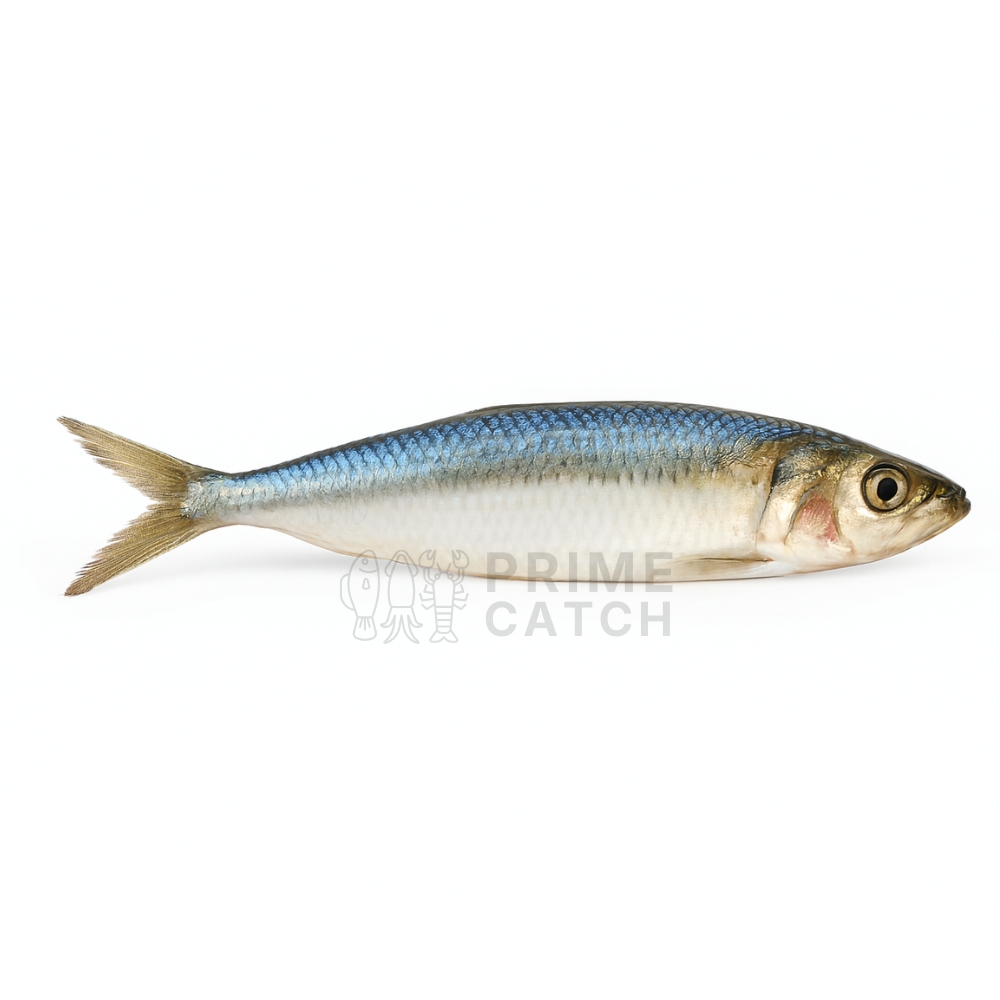
Sardinella longiceps, the Indian Sardine, is the Arabian Sea’s finest representative of that tradition. It is a species of notably restricted natural distribution, found only in the northern Indian Ocean, the Gulf of Oman, and the Arabian Sea coastlines, absent from the Persian Gulf and the Red Sea, and present in genuine abundance only in the productive coastal shelf waters of the Makran Coast, the Sindh coastline, and the adjacent offshore zones where Pakistan’s sardine fishery has operated for generations.
At Prime Catch, we source exclusively wild-caught Indian Sardine from these waters, landed at Karachi Fish Harbour and delivered to our clients with an urgency that this species demands above almost all others. The Indian Oil Sardine is among the most perishable fish in the sea, more delicate in structure, more volatile in freshness, and more sensitive to improper handling than even the Indian Mackerel. Chemical treatment is the norm in the commercial sardine trade for precisely this reason. Prime Catch’s absolute commitment to chemical-free, fresh-only handling means that what arrives at your kitchen is something the standard market simply cannot offer: a truly fresh Indian Oil Sardine in the condition that makes it one of the most deeply flavourful and honest fish available anywhere.
Flavour Profile
The Indian Oil Sardine is a fish of maximum flavour in minimum size, and it makes no concession to delicacy in how it delivers that flavour.
The flesh is dark, rich, and deeply pigmented, darker in tone than the Indian Mackerel and noticeably more intense in every respect. The natural oil content of Sardinella longiceps is among the highest of any fish in the Arabian Sea fishery, and it is this oil, distributed throughout every fibre of the flesh, that is the source of the flavour, the nutritional density, and the culinary authority that has made the sardine one of the most celebrated ingredients in every serious coastal kitchen in the world.
The dominant flavour note is powerfully savoury, deeply marine, and richly umami, a concentration of oceanic character that reflects the species’ plankton-rich diet of diatoms and copepods in the productive surface waters of the Arabian Sea. It is more assertive than the Indian Mackerel, with a fuller, more persistent mid-palate and a longer, more satisfying finish. The aroma is pronounced and unmistakably the smell of a genuinely fresh, oil-rich sea fish: vivid, marine, and entirely distinct from the flat, chemical smell of improperly handled or preserved specimens. On a truly fresh sardine at Prime Catch’s standard, this aroma is not a warning but an invitation.
The flesh is exceptionally delicate in structure, more so than any other species in the Prime Catch portfolio. It is fine-grained, softly yielding, and quick to flake along its natural grain, properties that make it highly responsive to heat and highly sensitive to rough handling at every stage. The bone structure is fine and numerous, integrated throughout the flesh in the manner characteristic of the Clupeidae family, and this is a quality that experienced cooks accept as part of the character of the species rather than a defect. Properly cooked, particularly when fried or grilled to a full crisp, the smaller bones soften sufficiently to become entirely edible, and in many of the finest traditional preparations of this fish across the world, they are eaten without any concern whatsoever.
Habitat
Sardinella longiceps occupies one of the more geographically restricted ranges of any commercially significant sardine species in the world. It is found exclusively in the northern regions of the Indian Ocean, specifically along the Gulf of Oman, the Arabian Sea, and the western and southern coasts of the Indian subcontinent. It is notably absent from the Red Sea and the Persian Gulf, making the Arabian Sea and its adjacent waters one of the primary and defining habitats of this species globally.
In Pakistani waters, the species is most densely associated with the shallow, warm, plankton-rich coastal shelf waters of the Makran Coast and the Balochistan coastline, particularly the productive upwelling zones around Gwadar, Pasni, and Ormara, as well as the inner shelf zones of the Sindh coast. The species is strongly pelagic and forms large seasonal schools in the surface and mid-water column, feeding on phytoplankton including diatoms and dinoflagellates and zooplankton including copepods. This planktonic diet in the exceptionally productive monsoon-upwelling surface waters of the Arabian Sea is the direct source of the extraordinary oil content and flavour intensity that distinguishes wild Arabian Sea specimens from sardines of other origins.
The Indian Oil Sardine moves in large, fast-moving schools near the ocean surface, rising to the uppermost water column at night and descending during the day. It is caught primarily by purse seine and fine-mesh gillnet operations, with peak seasonal landings typically occurring during the post-monsoon period when the schools are at their most concentrated and most accessible.
Taxonomy
| Classification Level | Detail |
|---|---|
| FAO Name | Indian Oil Sardine |
| Scientific Name | Sardinella longiceps (Valenciennes, 1847) |
| Common Names | Indian Oil Sardine, Oil Sardine, Indian Sardine |
| Phylum | Chordata |
| Class | Actinopterygii |
| Order | Clupeiformes |
| Family | Clupeidae |
| Genus | Sardinella |
| Species | longiceps |
| FAO Species Code | SIL |
| IUCN Status | Least Concern |
Sardinella longiceps was formally described by the French zoologist Achille Valenciennes in 1847. The genus name Sardinella is a diminutive derived from the Latin sarda, meaning sardine, itself associated with the island of Sardinia where the European sardine was historically most abundant. The species name longiceps derives from the Latin for long-headed, a reference to the characteristically elongated, almost subcylindrical body profile that distinguishes this species from the more laterally compressed sardines of other families. It belongs to the Clupeidae, the herrings and sardines, one of the most ecologically and commercially important fish families in the world ocean, whose members form the nutritional foundation of marine food webs from the surface to the plate.
Physical Attributes
| Attribute | Detail |
|---|---|
| Body Form | Small, elongated, almost subcylindrical with a slightly rounded belly and distinctly streamlined profile |
| Maximum Length | 23 to 28 cm standard length |
| Common Length | 17 to 22 cm |
| Common Weight | 60g to 180g per fish |
| Body Colour | Bright silver flanks with a faint golden midlateral line, a faint golden spot behind the gill opening, and a small black spot on the hind border of the gill cover |
| Flesh Colour (raw) | Dark tan to deep warm brown, noticeably darker and richer than the Indian Mackerel, reflecting exceptional oil content |
| Flesh Colour (cooked) | Deep gold to warm brown, richly moist when properly handled |
| Texture (raw) | Very soft, delicate, and fine-grained, the most structurally fragile species in the Prime Catch portfolio |
| Texture (cooked) | Tender, moist, and richly yielding, with a deep, oil-rich mouthfeel |
| Fat Content | Very high, among the highest natural oil content of any Arabian Sea species |
| Bone Structure | Fine, numerous, and integrated throughout the flesh, characteristic of the Clupeidae family |
| Aroma | Strong, pronounced, and powerfully marine on fresh specimens, more intense than the Indian Mackerel |
| Handling Requirement | Critical. The most structurally delicate and perishable fish in the Prime Catch portfolio. Requires immediate icing, zero chemical treatment, and same-day delivery without exception |
| Available Preparations | Whole Round · Whole Gutted and Cleaned Head-On · Headless Gutted and Cleaned |
Preparation Formats
Given the Indian Oil Sardine’s small individual size and exceptional structural delicacy, Prime Catch offers this species in three preparation formats only. The fine, integrated bone structure and the soft, oil-rich flesh make filleting impractical and unnecessary, as the finest culinary traditions associated with this fish universally prefer whole preparations.
Whole Round — The fish as landed: whole, ungutted, and entirely intact. The ideal format for freshness verification, with bright eyes, red gills, firm belly, and vivid silver flanks all immediately assessable. Recommended for charcoal grilling and traditional whole-fish preparations where the gut cavity contributes to the aromatic character of the finished dish. Best handled with care and minimal contact to preserve the delicate skin and flesh integrity.
Whole Gutted and Cleaned, Head-On — Eviscerated, rinsed, and presented with head and tail intact. The most widely used preparation format for the Indian Oil Sardine across every culinary tradition in which it is celebrated. The head is retained as it contributes significantly to the flavour and moisture of the fish during cooking. This is the format recommended for grilling, baking, shallow-frying, and all spiced whole-fish preparations.
Headless Gutted and Cleaned — Gutted, cleaned, and head-removed. A neat, practical format for those who prefer a cleaner presentation or a more manageable fish in the pan. Suitable for all cooking methods applied to the gutted whole format, requiring careful handling to maintain the integrity of the delicate flesh during preparation.
A Note on Handling, Bones, and Freshness
The Indian Oil Sardine requires a direct and honest conversation about two qualities that are specific to this species and that distinguish it from everything else in the Prime Catch portfolio.
On handling: this is the most structurally fragile and the most perishable fish we sell. The flesh is soft, the skin is thin, and the natural oils that make it so nutritionally and culinarily exceptional are also what make it deteriorate faster than any other species. Our handling protocol for this species is the most time-critical of anything we produce: iced within minutes of landing, processed immediately, and delivered the same day without exception. There is no commercially acceptable version of this fish that arrives at a premium kitchen in any other way. Chemical treatment preserves the appearance of freshness while destroying the flavour that makes fresh sardine worth eating in the first place. Prime Catch uses none.
On bones: the Indian Oil Sardine has a fine, numerous bone structure that is native to the Clupeidae family and is not removable without destroying the integrity of the flesh. This is not a defect. It is a characteristic that every culinary tradition associated with this fish has long accommodated and often exploited: in traditional whole-frying preparations, the small bones crisp along with the skin and become entirely edible, producing a fish that is consumed from head to tail. For clients who are not accustomed to whole small fish, the gutted head-on format, grilled or fried until fully crisp, is the most forgiving preparation.
Cooking Preferences — International Fine Dining
The Indian Oil Sardine has sustained entire coastal civilisations, inspired dedicated festivals in Portugal and Spain, and earned a permanent position on the menus of the finest seafood restaurants from Lisbon to Tokyo to Karachi. Its cooking traditions are as diverse as its distribution and as honest as the fish itself.
Europe — Grilled, Cured, Escabeche and Conserva: The sardine is the defining fish of the European coastal kitchen, and the traditions built around it are among the oldest and most refined in the entire culinary world. In Portugal and Spain, whole gutted sardines grilled over live coals with sea salt and nothing else is one of the great festival dishes of the annual calendar. In Sicily, sardines baked with breadcrumbs, raisins, pine nuts, and saffron produce a dish of extraordinary complexity that showcases the fish’s deep, savoury character. The Provençal and Catalan traditions of preserving sardines in quality olive oil, known as conserva, and the escabeche tradition of vinegar-marinating lightly fried sardines are preparations in which the boldness of the fish’s natural flavour is the entire point.
The Americas — Grilled, Smoked and Latin Escabeche: Across North and South America, the oily small fish tradition finds its fullest contemporary expression in the revival of whole-fish grilling and smoking at the finest coastal restaurants. Fresh sardines grilled over live hardwood charcoal, dressed simply with sea salt, lemon, and cold-pressed olive oil, are a centrepiece preparation at many of the most celebrated seafood restaurants in North America. Latin American escabeche traditions, in which lightly fried sardines are marinated in vinegar, aromatics, and spices and served at room temperature, are preparations of considerable elegance that showcase the fish’s flavour over time as the marinade and the natural oils interact.
East Asia — Salt-Grilled, Marinated and Preserved: In the salt-grilling tradition of East Asian cuisine, the small oily fish reaches its most technically precise and most flavourfully concentrated expression. Whole gutted sardines, salted generously and grilled over binchotan charcoal until the skin crisps and chars, produce a dish of extraordinary depth. Soy and mirin braising with ginger is a classic Japanese preparation of this class of fish. Miso-marinated and grilled, the sardine develops a caramelised, fermented crust that concentrates and complements its natural umami intensity.
South and Southeast Asia — Spiced, Fried and Curried: Across the coastal traditions of South and Southeast Asia, the sardine is one of the most beloved fish of the daily seafood table, eaten with freshly cooked rice in households from the Sindh coast to Kerala to Sri Lanka in a tradition of comfortable, deeply satisfying daily luxury. Whole shallow-frying in spiced oil until the skin crisps and the bones soften is the most universal preparation, producing a fish that is eaten in its entirety. Tamarind-based curries, dry masala preparations with curry leaf and mustard seed, and fresh coconut chutneys all complement the sardine’s assertive character with regional elegance.
The Middle East and Mediterranean — Charcoal-Grilled, Herb-Stuffed and Preserved: Across the broader Middle East and the Mediterranean arc, the small oily fish has a tradition of daily celebration that is as deep as the tradition of the sea itself. Whole charcoal-grilling, stuffed with fresh herbs and sumac and marinated in lemon and olive oil, is the dominant preparation of the finest fresh sardine from Oman to Morocco. Chermoula, the North African herb and spice paste of coriander, cumin, garlic, and preserved lemon, is the most celebrated marinade for this class of fish in the region, producing a preparation of bold, layered complexity that matches the sardine’s character perfectly.
General Guidance for Home Preparation: Score the flesh on both sides before cooking, two or three cuts per side. For shallow-frying, use a generous depth of oil at high temperature and do not move the fish until the skin releases naturally from the pan surface. The bones in a fully fried sardine will have softened considerably and need not be removed for eating. For grilling, brush the fish generously with oil before it meets the grill to prevent the delicate skin from sticking. This fish requires high heat and short time: a whole gutted sardine needs no more than 2 to 3 minutes per side on a hot grill or in a hot pan. Serve immediately, as this is a fish that is always best the moment it leaves the heat.
Health Benefits
The Indian Oil Sardine is one of the most nutritionally concentrated whole foods available in any culinary tradition anywhere in the world. Its combination of exceptional omega-3 density, complete protein, bone-derived calcium, and a full spectrum of fat-soluble vitamins makes it arguably the single most nutrient-dense fish available at the Prime Catch standard.
Omega-3 Fatty Acids — Among the Richest Sources Available The Indian Oil Sardine is one of the most concentrated whole-food sources of EPA and DHA omega-3 fatty acids available, with a fat content and omega-3 density that places it in the same tier as salmon and well above any white fish species. A single serving provides omega-3 concentrations with the most robust clinical evidence base for cardiovascular protection, inflammation reduction, neurological health, and cognitive function support. Reference: Harvard Health Publishing — Omega-3 Fatty Acids: An Essential Contribution
High-Quality Complete Protein The Indian Oil Sardine delivers approximately 18 to 22 grams of complete protein per 100 grams of edible flesh, containing all nine essential amino acids in optimal biological ratios. Its high natural fat content adds caloric density and satiety value that makes a small serving of sardine more satisfying than a considerably larger serving of leaner fish. Reference: WebMD — Health Benefits of Sardines
Calcium and Phosphorus — Exceptional Bone-Derived Mineral Density Because the small bones of the Indian Oil Sardine are consumed along with the flesh in traditional whole-eating preparations, this species delivers a bone-derived calcium and phosphorus content that is entirely unique among the Prime Catch portfolio. Eaten whole, sardines are one of the most bioavailable dietary sources of calcium available in any non-dairy food, of direct clinical significance for bone density, cardiovascular function, and neuromuscular health. Reference: Harvard Health Publishing — Calcium and Bone Health
Vitamin D — One of the Most Concentrated Dietary Sources As one of the highest-fat pelagic species available, the Indian Oil Sardine is among the richest whole-food dietary sources of Vitamin D, the fat-soluble vitamin essential for calcium absorption, bone density, immune function, and mood regulation. A single serving can provide a clinically meaningful proportion of the recommended daily intake. Reference: Harvard Health Publishing — Vitamin D and Your Health
Vitamin B12 — Critical Neurological Support Oily pelagic fish are among the richest dietary sources of Vitamin B12 available in any whole food, and the Indian Oil Sardine is one of the most concentrated sources within this category. A standard serving provides well above the recommended daily intake for this vitamin, essential for neurological function, red blood cell formation, and DNA synthesis. Reference: Mayo Clinic — Vitamin B12
Selenium — Antioxidant Defence and Immune Support The Indian Oil Sardine is a meaningful dietary source of selenium, the trace mineral essential for oxidative free radical defence, immune system regulation, and thyroid hormone synthesis, at concentrations that make a standard serving a clinically significant dietary contribution. Reference: Mayo Clinic — Selenium
Coenzyme Q10 — Cellular Energy and Cardiovascular Health Small oily pelagic fish are among the most significant natural dietary sources of Coenzyme Q10, a fat-soluble compound with a well-established role in mitochondrial energy production, cardiovascular health, and antioxidant defence, present in meaningful concentrations in the Indian Oil Sardine’s rich, oil-saturated flesh. Reference: Mayo Clinic — Coenzyme Q10
A Note on Prime Catch Standards
Every Indian Oil Sardine bearing the Prime Catch name is:
- Wild-caught from the Arabian Sea, one of the primary and defining natural habitats of this geographically restricted species
- Fresh, never frozen — iced at landing and delivered the same day, reflecting the species’ position as the most perishable product in the Prime Catch portfolio
- Chemical-free — zero sodium metabisulphite, zero preservative treatment of any kind
- Handled with maximum care — the most structurally delicate fish we sell, treated accordingly at every stage from landing to delivery
- Available in three preparation formats — Whole Round, Whole Gutted and Cleaned Head-On, and Headless Gutted and Cleaned
- Priced per kilogram across all preparation formats
Prime Catch. For those who accept no substitution.
Reviews
There are no reviews yet.