
Introduction
Not every great fish announces itself with size or spectacle.
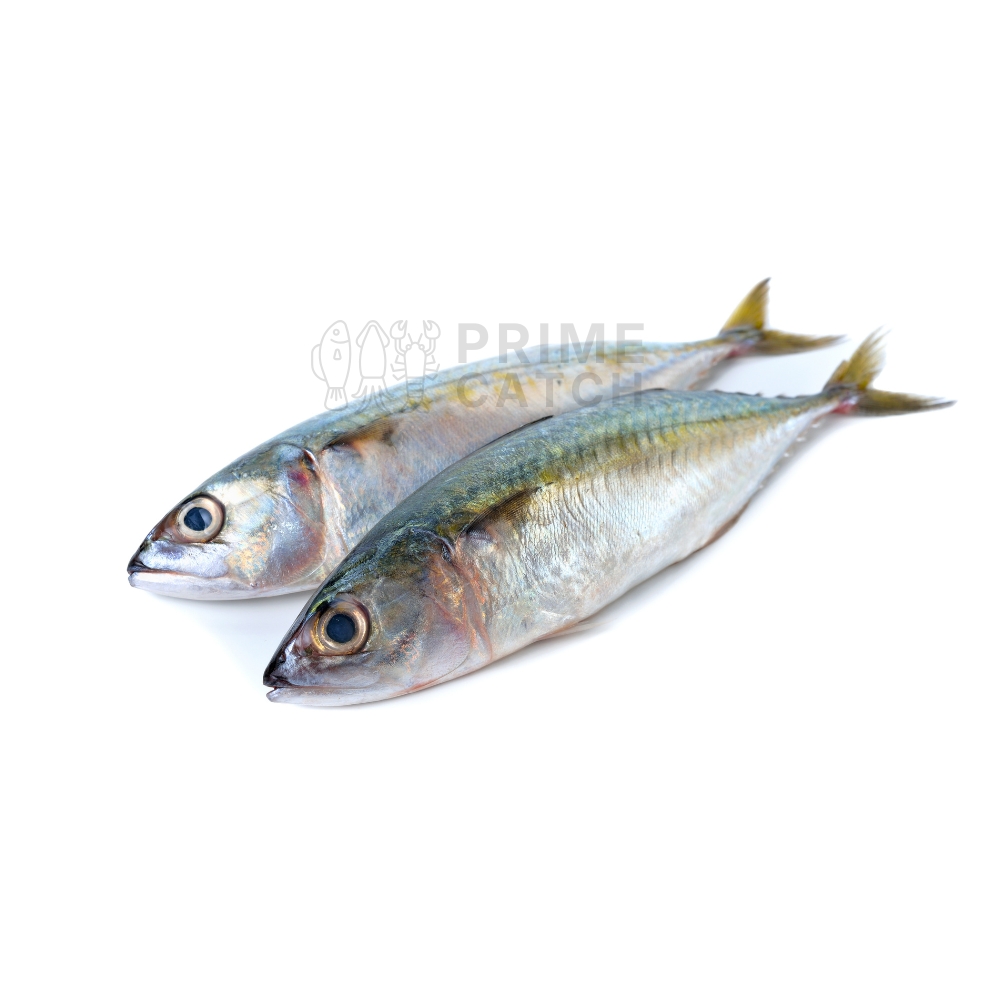
The Indian Mackerel is small, fast-moving, and silver-flanked, and it has been feeding the coastlines of the Arabian Sea, the Gulf, the Indian subcontinent, and Southeast Asia for as long as people have been fishing these waters. Rastrelliger kanagurta is not a fish of occasion. It is a fish of culture, of daily life, of the kind of deeply embedded culinary tradition that only a species with this level of flavour, this level of abundance, and this level of honest character can sustain across centuries.
At Prime Catch, we include the Indian Mackerel in our portfolio for one specific reason: because, at the standard of absolute freshness that this species demands above all others, it is a completely different eating experience from the mackerel most people know. The Indian Mackerel is one of the most perishable fish in the sea. Its high natural oil content, the very quality that makes its flavour so rich and so distinctive, is also what makes it deteriorate faster than almost any other species in the Arabian Sea fishery. Chemical preservative treatment is standard practice in the commercial mackerel trade for this precise reason, and chemically treated mackerel is a shadow of the real thing.
What Prime Catch delivers is the real thing: wild-caught from the coastal pelagic zones of the Sindh and Balochistan coastlines, handled with the care and immediacy that this delicate species demands, and delivered to your kitchen fresh, untreated, and in the condition that makes the Indian Mackerel one of the most deeply satisfying fish in any serious seafood kitchen.
Flavour Profile
The Indian Mackerel is an experience in honest, assertive flavour, and it makes no apology for that fact.
The flesh is tan to warm brown in colour, darker and richer than any white fish on the Prime Catch list, a direct expression of the species’ high natural oil content and its pelagic, filter-feeding lifestyle in the plankton-dense surface waters of the Arabian Sea. This colouration is not a defect or a sign of age. It is the characteristic of a species with a fat-to-protein ratio that places it firmly in the category of the great oily fish, alongside the Atlantic mackerel, the sardine, and the anchovy, a family of ingredients that the finest kitchens in the world prize precisely for the intensity and depth of flavour that no lean white fish can match.
The dominant flavour note is rich, savoury, and unmistakably oceanic, with a depth and persistence on the palate that reflects the species’ full, oily flesh. The mid-palate carries a mineral intensity that speaks directly to the natural plankton diet of this open-water filter feeder. The finish is long, satisfying, and pronounced, a quality that the finest mackerel preparations in every culinary tradition are specifically designed to balance and complement rather than suppress.
The aroma is strong, distinctive, and deeply marine. On a properly fresh specimen handled to Prime Catch’s standard, this aroma is vivid and appealing, the smell of the open sea concentrated in a small, oil-rich fish of exceptional quality. It is the aroma of freshness, not of deterioration, and it is entirely unlike the flat, ammoniacal smell of a chemically preserved or improperly handled specimen. Clients who know the difference will recognise it immediately. Those encountering a truly fresh Indian Mackerel for the first time will understand, in the moment of cooking, why this fish has sustained entire coastal cultures across the Indo-Pacific for thousands of years.
The flesh is delicate in structure despite its strength of flavour. It flakes easily and softly along its natural grain, requiring a confident but gentle approach to every stage of preparation from cleaning to cooking to service.
Habitat
Rastrelliger kanagurta is a pelagic shoaling species with one of the widest distributions of any commercially significant fish in the Indo-Pacific, ranging across the coastal waters of the Red Sea, the Arabian Gulf, the Arabian Sea, the Bay of Bengal, and the coastal zones of Southeast Asia from Myanmar to Malaysia and the Philippines.
In Pakistani waters, the species forms large commercial fisheries along the entire length of the Sindh and Balochistan coastlines, favouring the shallow, warm, plankton-rich surface waters of the inner shelf and the productive upwelling zones associated with the seasonal southwest monsoon. The Indian Mackerel is a filter feeder, consuming primarily zooplankton, phytoplankton, and small crustaceans at or near the ocean surface. This plankton-based diet, in the exceptionally productive monsoon-driven surface waters of the Arabian Sea, is the source of both the high natural oil content and the distinctive mineral intensity of flavour that characterises well-handled specimens from these waters.
The species moves in large, fast-moving schools close to the surface, making it one of the most efficiently caught pelagic species in the Arabian Sea fishery and one of the most important contributors to the commercial catch volumes landed at Karachi Fish Harbour throughout the peak fishing season.
Taxonomy
| Classification Level | Detail |
|---|---|
| FAO Name | Indian Mackerel |
| Scientific Name | Rastrelliger kanagurta (Cuvier, 1816) |
| Common Names | Indian Mackerel |
| Phylum | Chordata |
| Class | Actinopterygii |
| Order | Scombriformes |
| Family | Scombridae |
| Genus | Rastrelliger |
| Species | kanagurta |
| FAO Species Code | RAK |
| IUCN Status | Least Concern |
Rastrelliger kanagurta was formally described by the French naturalist Georges Cuvier in 1816. It belongs to the Scombridae family, the mackerels and tunas, one of the most commercially significant fish families in the world and the same lineage to which the Yellowfin Tuna belongs. The genus name Rastrelliger derives from the Latin rastrellum, meaning rake or comb, a reference to the species’ distinctive, elongated gill rakers that are visibly extended when the mouth is open and function as filter-feeding structures for trapping plankton from the water column.
Physical Attributes
| Attribute | Detail |
|---|---|
| Body Form | Small, streamlined, spindle-shaped pelagic fish with a slightly compressed body and forked caudal fin |
| Common Length | 17 cm to 27 cm total length |
| Common Weight | 80g to 250g per fish |
| Body Colour | Bright silver on flanks and belly, with narrow dark to golden-green stripes on the dorsal surface and a double row of small dusky spots along the upper back |
| Distinctive Marking | A prominent black spot on the body directly below the lower margin of the pectoral fin |
| Flesh Colour (raw) | Tan to warm brown, noticeably darker than white fish species, reflecting the high natural oil content |
| Flesh Colour (cooked) | Warm brown to pale gold, firm and moist when correctly handled |
| Texture (raw) | Soft, delicate, and fine-grained, requiring careful and gentle handling at every stage |
| Texture (cooked) | Tender, moist, and richly flaking, with a satisfying oil-rich mouthfeel |
| Fat Content | High, an oily fish species with significant natural oil content throughout the flesh |
| Aroma | Strong, distinctly marine, and pronounced on fresh specimens, a direct indicator of oil content and freshness |
| Handling Requirement | High. Among the most perishable fish in the Arabian Sea fishery. Requires immediate icing, chemical-free handling, and same-day delivery |
| Available Preparations | Whole Round · Whole Gutted and Cleaned Head-On · Headless Gutted and Cleaned |
Preparation Formats
Given the Indian Mackerel’s small individual size, typically ranging from 80 to 250 grams per fish, Prime Catch offers this species in three preparation formats. Filleting and steak-cutting are not appropriate for specimens of this size and would result in unnecessary yield loss and structural damage to the delicate flesh.
Whole Round — The fish as landed: whole, ungutted, and entirely intact. The ideal format for freshness verification, with eyes, gills, belly firmness, and the brightness of the characteristic silver flanks all immediately assessable. Whole round mackerel is the preferred format for charcoal-grilling and certain traditional baking preparations where the gut cavity contributes to the flavour of the finished dish.
Whole Gutted and Cleaned, Head-On — Eviscerated, rinsed, and presented with head and tail intact. The most practical and most widely used preparation format for Indian Mackerel across every culinary tradition in which this fish is celebrated. The head is retained in this format as it contributes to the flavour and moisture of the fish during cooking. This is the format recommended for all whole-fish grilling, baking, frying, and spiced preparations.
Headless Gutted and Cleaned — Gutted, cleaned, and head-removed. A neat, practical format for those who prefer a cleaner, more manageable fish at the table or in the pan. Suitable for all cooking methods applied to the gutted format, with a slightly shorter cooking time due to the reduced mass.
A Note on Handling and Freshness
The Indian Mackerel deserves specific attention on the subject of handling in a way that no other species on the Prime Catch list quite demands.
This is the most perishable fish we sell. Its high natural oil content, the very quality responsible for its exceptional flavour, makes it more susceptible to rapid deterioration than any white fish species. At room temperature, a freshly landed Indian Mackerel begins to lose its optimal quality within hours. Chemical preservative treatment with sodium metabisulphite and related compounds is standard commercial practice for this species in most markets, because it is the only way a poorly handled supply chain can mask the deterioration that improper storage and delayed processing produce.
Prime Catch does not use chemical treatment of any kind. Our Indian Mackerel is iced immediately at landing, processed at our facility within hours of arrival at Karachi Fish Harbour, and delivered on the same day. The result is a fish that smells as the sea smells, that cooks as the finest mackerel anywhere in the world cooks, and that delivers the full, rich, complex flavour that this species carries when it is treated with the urgency and care it demands.
At Prime Catch’s standard, the Indian Mackerel is not a budget fish. It is a precision product that requires more careful handling than almost anything else we offer, and it is priced and presented accordingly.
Cooking Preferences — International Fine Dining
The Indian Mackerel’s strong flavour, high oil content, and small, manageable size have inspired a remarkable diversity of preparations across the cooking traditions of the Indo-Pacific, Mediterranean, and beyond. The fish rewards bold treatment and responds poorly only to neglect.
Europe — Grilled, Cured and Smoked: European culinary tradition has a deep and long-standing relationship with oily small fish, and the Indian Mackerel occupies the same position in this tradition as the Atlantic mackerel of the North Sea: a fish of genuine complexity and depth that rewards the simplest possible cooking with the most honest possible result. Whole gutted mackerel, scored deeply, rubbed with sea salt, cold-pressed olive oil, and fresh herbs, and grilled over live coals until the skin crisps and chars, is a preparation of irreducible correctness. Salt-curing in a mixture of sea salt, sugar, and dill, then serving thinly sliced with a sharp mustard dressing, is the Scandinavian-influenced European preparation of this class of fish at its most refined. Smoking over oak or apple wood produces a fish of extraordinary aromatic depth that holds its complexity for days.
The Americas — Escabeche, Live-Fire and Acid-Cured: Across North and South America, the small oily fish tradition finds its most celebrated expression in the escabeche, in which the whole gutted mackerel is lightly fried then marinated in vinegar, aromatics, and spices over several hours, producing a preparation of considerable complexity that improves with time. Latin American traditions of grilling small oily fish over live coals with citrus, chilli, and fresh herbs are a natural fit for the Indian Mackerel’s bold character. The fish’s oil content makes it an ideal candidate for the acid-curing traditions of the region, where the natural fat of the flesh is balanced by the sharp brightness of fresh lime and chilli.
East Asia — Grilled with Salt, Braised and Marinated: In East Asian culinary tradition, the small oily fish is a study in the art of extracting maximum flavour from minimum size. Salt-grilling whole gutted mackerel over binchotan charcoal, a preparation of extraordinary simplicity and flavour concentration, is one of the defining dishes of the Japanese izakaya tradition and translates directly to the Indian Mackerel with remarkable success. Soy-braised preparations with ginger, mirin, and sake produce a fish of deep, savoury complexity. Marinated in miso and grilled, the Indian Mackerel develops an extraordinary caramelised crust of concentrated umami that speaks to the species’ natural affinity for fermented and savoury treatments.
South and Southeast Asia — Spiced, Fried, Curried and Grilled: The Indian Mackerel is at home across the entire arc of South and Southeast Asian coastal cooking in a way that no other species quite matches. It is the fish most closely associated with the domestic daily seafood table across the region, the one that smells of the fisherman’s landing and the family kitchen in equal measure. Whole frying in spiced oil until the skin crisps to a deep golden brown is the most universal preparation. Coconut milk curries, tamarind-based broths, and dry-spiced masala preparations all carry the mackerel’s strong, oily character with considerable sophistication. In the most refined regional preparations, the fish is marinated in a fresh green herb paste and grilled over live coals until the skin chars and crisps, producing a dish of genuine complexity and deeply satisfying cultural resonance.
The Middle East and Mediterranean — Charcoal-Grilled, Spiced and Herb-Stuffed: Across the Arabian Gulf and the broader Middle Eastern seafood table, the mackerel is a fish of familiar, deeply embedded cultural significance. Whole charcoal-grilling, stuffed with fresh herbs and sumac and scored for maximum marinade absorption, is the dominant preparation, producing a fish of smoky, aromatic richness. Chermoula-marinated and baked whole, or spiced with cumin, coriander, and harissa and grilled over live fire, the mackerel’s robust flavour carries the bold, aromatic spicing traditions of the region with complete authority.
General Guidance for Home Preparation: Score the flesh deeply on both sides before cooking, three cuts per side minimum, reaching close to the bone. This is not optional with a fish of this oil content: scoring allows the heat to penetrate the thick, oily flesh evenly and allows the natural oils to baste the flesh from within during cooking. Cook over high heat and do not move the fish until it releases naturally from the grill or pan surface, a sign that the skin is properly crisped. The mackerel’s oil content means it can withstand bold, high-temperature cooking far better than leaner fish. Serve immediately. This is a fish that is always best at the moment it leaves the heat.
Health Benefits
The Indian Mackerel is among the most nutritionally concentrated foods available in any culinary tradition, combining extraordinary omega-3 density, complete protein, and a micronutrient profile that has made oily small fish the cornerstone of dietary recommendations from virtually every major nutritional authority in the world.
Omega-3 Fatty Acids — Exceptional Density in a Small Package The Indian Mackerel is one of the richest whole-food sources of EPA and DHA omega-3 fatty acids available, with a fat content and omega-3 density that competes directly with salmon and far exceeds any lean white fish species. A single serving provides omega-3 concentrations with robust clinical evidence for cardiovascular protection, systemic inflammation reduction, neurological health, and cognitive function support. Reference: Harvard Health Publishing — Omega-3 Fatty Acids: An Essential Contribution
High-Quality Complete Protein The Indian Mackerel delivers approximately 18 to 22 grams of complete protein per 100 grams of edible flesh, containing all nine essential amino acids in optimal biological ratios. The combination of high protein and high natural fat content makes it one of the most calorically dense and nutritionally complete whole fish available. Reference: WebMD — Health Benefits of Fish
Vitamin D — One of the Richest Sources Available As a high-fat pelagic species, the Indian Mackerel is among the most significant whole-food dietary sources of Vitamin D, the fat-soluble vitamin essential for calcium absorption, bone density, immune function, and mood regulation. A single serving can provide a clinically significant proportion of the recommended daily intake. Reference: Harvard Health Publishing — Vitamin D and Your Health
Vitamin B12 — Neurological and Haematological Health Oily pelagic fish are among the richest dietary sources of Vitamin B12 available, and the Indian Mackerel is no exception. A standard serving provides well above the recommended daily intake for this vitamin, which is essential for neurological function, red blood cell formation, and DNA synthesis. Reference: Mayo Clinic — Vitamin B12
Selenium — Antioxidant Defence and Thyroid Support The Indian Mackerel is a meaningful source of selenium, the trace mineral essential for oxidative free radical defence, immune system regulation, and thyroid hormone synthesis, at concentrations that make a standard serving a clinically significant dietary contribution. Reference: Mayo Clinic — Selenium
Coenzyme Q10 — Cellular Energy and Cardiovascular Support Oily fish, particularly smaller pelagic species such as the Indian Mackerel, are among the most significant natural dietary sources of Coenzyme Q10, a fat-soluble compound with a well-established role in mitochondrial energy production, cardiovascular health, and antioxidant defence. Reference: Mayo Clinic — Coenzyme Q10
Iodine — Thyroid and Metabolic Regulation As a wild marine pelagic species inhabiting the iodine-rich surface waters of the Arabian Sea, Rastrelliger kanagurta accumulates dietary iodine at levels of genuine clinical significance, supporting healthy thyroid function, metabolic regulation, and neurological development. Reference: Harvard Health Publishing — Iodine Deficiency
A Note on Prime Catch Standards
Every Indian Mackerel bearing the Prime Catch name is:
- Wild-caught from the pelagic coastal waters of the Arabian Sea, Sindh and Balochistan coastlines
- Fresh, never frozen — iced at landing and delivered the same day, reflecting the species’ exceptional perishability
- Chemical-free — zero sodium metabisulfite, zero preservative treatment of any kind, a standard of particular significance for this species
- Handled with precision — the most perishable and most handling-sensitive product in the Prime Catch portfolio, treated accordingly at every stage from landing to delivery
- Available in three preparation formats — Whole Round, Whole Gutted and Cleaned Head-On, and Headless Gutted and Cleaned
- Priced per kilogram across all preparation formats
Prime Catch. For those who accept no substitution.
Reviews
There are no reviews yet.