
Introduction
In the hierarchy of flatfish, the Indian Halibut occupies a position of singular distinction.
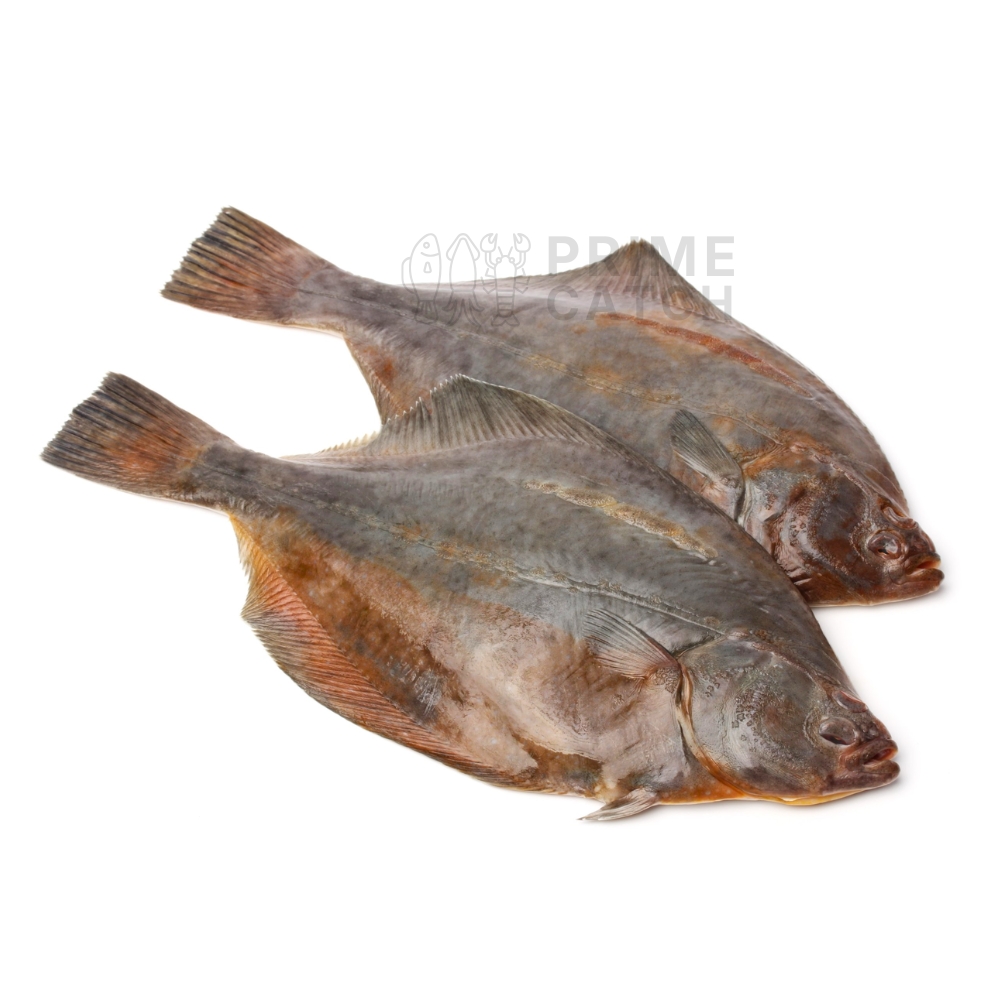
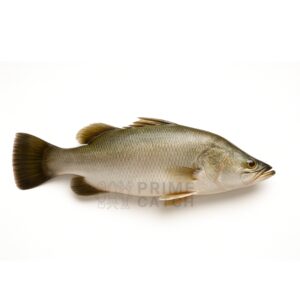
Psettodes erumei — known locally along the Karachi coastline as Hajjam — is not the refined, paper-thin flounder of cold northern waters. It is something considerably more substantial: a large, thick-bodied flatfish of remarkable eating quality, possessing a firm, white flesh of genuine depth and a robustness of texture that sets it entirely apart from its more delicate flatfish relatives. It is, in practical terms, the halibut of the Indo-Pacific — a fish that commands presence on the plate, holds its structure under a wide range of cooking methods, and delivers a flavour experience that rewards rather than merely satisfies.
At Prime Catch, we source exclusively wild-caught specimens from the sandy and muddy seafloor habitats of the Arabian Sea — the deep, productive continental shelf waters off the Sindh and Balochistan coastlines where this species thrives in its most natural and flavourful condition. Landed fresh at Karachi Fish Harbour, handled without chemical treatment, and delivered without the compromise of freezing, our Indian Halibut arrives at your kitchen in the condition that its exceptional flesh demands: alive with the character of the sea it came from.
This is a fish for those who understand that the finest flatfish in the world are not a European monopoly. The Arabian Sea produces its own — and at Prime Catch’s standard of freshness, it is extraordinary.
Flavour Profile
The Indian Halibut presents a flavour profile of confident, clean authority — a fish that occupies the desirable middle ground between the delicacy of the pomfrets and the assertiveness of the snapper, and that does so with a character entirely its own.
The flesh is white, firm, and moderately lean — with a flavour of clean, sweet oceanic depth that is more substantial and more satisfying than the delicate white fish of the shallow-water species. There is a pleasing savouriness to the mid-palate, derived from the species’ active, carnivorous lifestyle as a predator of the sandy seabed — feeding on smaller fish, crustaceans, and cephalopods in the rich, productive waters of the Arabian Sea continental shelf. The finish is clean, moderately long, and entirely free of any heaviness or oiliness.
The texture is the defining quality of this species and the attribute that most clearly justifies its prestige: firm, dense, and structured — with a large, cohesive flake that holds together beautifully under the heat of a grill, the pressure of a pan, or the gentleness of a steamer. It is a fish of genuine culinary versatility, equally rewarding in bold spiced preparations and in the most restrained classical treatments. The skin, when correctly crisped, develops a golden, firm finish of considerable flavour and textural contrast to the yielding interior.
The Indian Halibut is, above all else, a fish of substance — and substance, handled with care and intelligence, is the foundation of every great dish.
Habitat
Psettodes erumei is found in the Indian and Pacific Oceans, from the Red Sea to northern Australia. In Pakistani waters, the species is most densely concentrated in the deeper sandy and muddy seafloor environments of the Arabian Sea continental shelf — typically ranging from 10 to 200 metres depth, commonly found in the Arabian Sea, especially near Pakistan’s coastline. WikipediaWholesome Seafood
Unlike the shallow-water pomfrets and the reef-dwelling snappers, the Indian Halibut is a creature of the deeper shelf — a bottom-dwelling ambush predator that lies concealed against the sandy or muddy substrate, feeding actively on smaller fish, crustaceans, and cephalopods that venture within range. This predatory diet, in the nutrient-rich, cold-upwelled waters of the Arabian Sea deep shelf, is the direct source of the firm texture and savoury flavour depth that distinguishes this species from more passive filter-feeding flatfish.
Psettodes erumei is regarded as one of the most primitive flatfish in evolutionary terms — retaining a thicker, less laterally compressed body form than more derived flatfish species, with a migrated eye positioned at the edge of the head rather than fully on top. This more robust body architecture is directly responsible for the greater flesh depth and structural density that makes it so rewarding at the table compared to the thinner-bodied flounders and soles. FishBase
Prime Catch sources exclusively from trawl and bottom-set gill net operations along the Arabian Sea shelf — vessels that land their catch directly at Karachi Fish Harbour, where our team takes custody within hours of landing.
Taxonomy
| Classification Level | Detail |
|---|---|
| FAO Name | Indian Halibut |
| Scientific Name | Psettodes erumei (Bloch & Schneider, 1801) |
| Common Names | Indian Halibut, False Halibut, Adalah, Hajjam |
| Local Name (Urdu) | Hajjam (حجام) |
| Phylum | Chordata |
| Class | Actinopterygii |
| Order | Pleuronectiformes |
| Family | Psettodidae |
| Genus | Psettodes |
| Species | erumei |
| FAO Species Code | PSE |
| IUCN Status | Data Deficient |
Psettodes erumei was formally described by Bloch and Schneider in 1801 and stands as the sole member of the family Psettodidae in the Arabian Sea — a family considered among the most evolutionarily primitive of all flatfish, retaining anatomical features that place it in a unique taxonomic position between the round fish and the more derived flatfish families. Its ancestral body plan — thicker, more muscular, and more structurally robust than the typical flatfish — is precisely what makes it so exceptional at the table.
Physical Attributes
| Attribute | Detail |
|---|---|
| Body Form | Thick-bodied, oval flatfish — considerably more robust than typical flounders or soles |
| Eye Position | Migrated eye at the dorsal edge of the head — a primitive flatfish characteristic |
| Colour (upper surface) | Brown to grey with pale horizontal stripe markings along the dorsal surface |
| Colour (lower surface) | Pale white to cream — the characteristic underside of a bottom-dwelling flatfish |
| Flesh Colour (raw) | Bright white to pale ivory — firm and dense |
| Flesh Colour (cooked) | Clean white, large-flaked, moist — retaining structure |
| Texture (raw) | Firm, dense, and structured — considerably thicker than typical flatfish |
| Texture (cooked) | Moist, substantial, and cleanly flaking in large segments |
| Fat Content | Low to moderate — lean but with sufficient fat for flavour and moisture retention |
| Skin | Firm and well-pigmented on the upper surface — excellent for high-heat skin-on preparations |
| Eyes (freshness indicator) | Bright, clear, and convex on Prime Catch-grade specimens |
| Gills (freshness indicator) | Deep red — the primary freshness indicator |
| Available Preparations | Whole Round · Whole Gutted & Cleaned · Headless Gutted & Cleaned · Bone-In Steaks · Boneless Fillet |
Preparation Formats
Prime Catch offers the Indian Halibut in five internationally recognised preparation formats, priced per kilogram:
Whole Round — The fish as landed from the Arabian Sea: whole, ungutted, and entirely intact. The definitive format for absolute freshness verification, preferred by professional kitchens and experienced cooks who wish to begin preparation at the most pristine possible starting point.
Whole Gutted & Cleaned · Head-On — Eviscerated, cleaned, and rinsed, with head and tail fully intact. The standard whole-fish format for roasting, grilling, and steaming — retaining the full flavour contribution of the head and collar during cooking. The preferred format for whole-fish presentations at the table.
Headless Gutted & Cleaned — Gutted, cleaned, and head-removed. A practical, neat format retaining the full flesh section — preferred for grilling and pan preparations where a cleaner table presentation is desired without sacrificing any of the prime flesh.
Bone-In Steaks · Cross-Cut — The whole fish cross-cut into uniform transverse steaks of consistent thickness — the most versatile and most widely used preparation format for this species across South Asian, Middle Eastern, and Gulf culinary traditions. Each steak retains the skin, the central bone, and the full flavour of the fish. The exposed cut surface produces exceptional caramelisation in shallow-frying and high-heat pan cooking, making this the preferred format for the most celebrated regional preparations of this species.
Boneless Fillet · Skin-On — The prime fillet section, carefully hand-cut from the bone and trimmed to a clean, presentation-ready format with skin intact. The professional kitchen’s preferred format for composed plating, precise pan-searing, and any preparation where bone-free service is essential. The Indian Halibut’s thick, substantial flesh makes it one of the most rewarding flatfish to fillet — producing a portion of considerable presence and structural integrity.
Cooking Preferences — International Fine Dining
The Indian Halibut’s firm texture, clean flavour, and substantial flesh depth make it one of the most broadly applicable luxury flatfish in any serious kitchen — equally distinguished in the classical restraint of a European preparation and the bold, aromatic traditions of South Asian and Middle Eastern cooking.
Europe — Pan-Seared, Roasted & Classically Sauced: European fine dining’s approach to a firm-fleshed white flatfish is one of studied precision and restrained elegance. The Indian Halibut fillet — skin-on, seared in clarified butter over high heat until the skin is golden and crackling, then finished briefly in a low oven — is a preparation of considerable technical satisfaction. The firm, dense flesh holds its shape impeccably, resisting the tendency to break apart that afflicts thinner, more delicate flatfish under the same treatment. Whole roasting with cold-pressed olive oil, sea salt, capers, and lemon zest produces a fish of remarkable aromatic presence. Classical French accompaniments — beurre noisette, sauce gribiche, or a simple court-bouillon reduction — are entirely at home with this species.
The Americas — Grilled, Blackened & Citrus-Forward: Across North and South America, the firm flatfish — grilled over live coals or seared in a cast-iron pan with bold spicing — is a celebrated luxury preparation. The Indian Halibut’s structural density makes it uniquely suited to the high-heat, bold-seasoning approach of North American grill cooking: blackened with a spice crust over intense heat, the exterior chars to a deeply flavoured crust while the interior remains moist and yielding. Citrus-based preparations — ceviche of finely sliced raw fillet dressed in fresh lime, chilli, and coriander — are an equally distinguished expression of a specimen of genuine freshness.
East Asia — Steamed, Ginger-Dressed & Wok-Finished: The Indian Halibut’s firm, white flesh and clean flavour make it a natural fit for the steaming traditions of East Asian fine dining — traditions that celebrate the purity of a fresh ingredient above all else. Whole steaming over ginger and spring onion, finished with cascading hot oil and aged soy sauce, produces a fish of extraordinary delicacy when the base ingredient is of Prime Catch’s freshness standard. The boneless fillet, skin-crisped in a hot pan and finished with a ginger-scallion oil dressing, is the contemporary fine dining expression of the same philosophy. Miso-marinated and oven-roasted — the celebrated saikyo-yaki preparation — the firm flesh absorbs the fermented umami of white miso with exceptional receptivity.
South & Southeast Asia — Spiced, Shallow-Fried & Coconut-Enriched: Across the coastal traditions of South and Southeast Asia, the Indian Halibut is a valued and familiar fish of the serious seafood household. Bone-in steaks, marinated in turmeric, chilli, and coriander, then shallow-fried in cold-pressed oil to a deep golden crust, represent one of the most universally beloved preparations of this species across the region — a dish of genuine emotional resonance for anyone raised on the cuisine of the Arabian Sea coastline. Coconut milk-based curries, light tamarind broths, and green herb pastes all complement the clean, sweet flesh of the halibut with considerable elegance. The boneless fillet, marinated and grilled over live coals, is the refined contemporary expression of the same regional tradition.
The Middle East & Mediterranean — Charcoal-Grilled, Spiced & Whole-Presented: Across the Arabian Gulf and the broader Middle Eastern seafood table, the Indian Halibut is a commercially significant and highly regarded species — a fish of familiar presence in the finest fish markets from Kuwait to Muscat. Charcoal-grilling whole, marinated in cumin, dried lemon, and herb-infused olive oil, is the dominant celebration preparation. Bone-in steaks, shallow-fried in spiced oil and served alongside aromatic rice and a herb salad, represent the most domestically beloved format of this fish across the Gulf. Oven-roasted with za’atar, preserved lemon, and pomegranate molasses, the boneless fillet offers a refined contemporary expression of the regional tradition at its most elevated.
General Guidance for Home Preparation: For bone-in steaks, ensure the pan or grill is thoroughly heated before the fish meets the surface — this species rewards and requires high initial heat for proper caramelisation. Allow 4–5 minutes per side for a standard steak. For boneless fillets, always begin skin-side down for 70% of the total cooking time. The firm flesh is forgiving of moderate heat but not of excessive time — as with all premium flatfish, the moment of correct doneness is brief and worth attending to.
Health Benefits
The Indian Halibut presents a nutritional profile of genuine clinical merit — combining high-quality lean protein, essential marine micronutrients, and the distinctive health properties of a wild-caught, deep-shelf predatory species.
High-Quality Complete Protein — Firm & Satiating The Indian Halibut delivers approximately 19–24g of complete protein per 100g of edible flesh — all nine essential amino acids in optimal biological ratios, in a firm, dense format that is among the most satiating of any marine protein source. Its substantial flesh depth means a single steak or fillet portion provides a genuinely satisfying and nutritionally complete meal. Reference: WebMD — Health Benefits of Fish
Omega-3 Fatty Acids — Cardiovascular & Cognitive Protection As a wild-caught, carnivorous predator feeding on a varied natural diet of fish, crustaceans, and cephalopods in the deep Arabian Sea shelf, the Indian Halibut accumulates meaningful concentrations of EPA and DHA — the long-chain omega-3 fatty acids with the most robust clinical evidence base for cardiovascular protection, systemic inflammation reduction, and neurological health maintenance. Reference: Harvard Health Publishing — Omega-3 Fatty Acids: An Essential Contribution
Selenium — Antioxidant Defence & Thyroid Support The Indian Halibut is a meaningful dietary source of selenium — the trace mineral essential for oxidative free radical neutralisation, immune system modulation, and thyroid hormone synthesis. Deep-shelf marine species are particularly reliable sources of this clinically significant micronutrient. Reference: Mayo Clinic — Selenium
Phosphorus — Bone Mineralisation & Cellular Energy The Indian Halibut is a concentrated source of phosphorus — the mineral second only to calcium in bone and dental mineralisation, and essential for cellular energy metabolism through its central role in ATP synthesis. Reference: Harvard Health Publishing — Phosphorus in Your Diet
Iodine — Thyroid & Metabolic Regulation As a wild marine species inhabiting the iodine-rich waters of the Arabian Sea deep shelf, Psettodes erumei accumulates dietary iodine at levels of genuine clinical significance — supporting healthy thyroid function, metabolic regulation, and neurological development in ways that inland protein sources are structurally unable to provide. Reference: Harvard Health Publishing — Iodine Deficiency
Low in Fat & Calories — Cardiovascular-Friendly Lean Protein The Indian Halibut is a lean, white-fleshed species — low in total fat, negligible in saturated fat, and modest in caloric density — making it among the most cardiovascular-friendly animal proteins available and a consistent recommendation of clinical dietary guidance for individuals managing lipid profiles, body weight, or metabolic health. Reference: Mayo Clinic — Dietary Fats
Vitamin B12 — Neurological & Haematological Health Marine fish are among the richest whole-food sources of Vitamin B12 — essential for neurological function, red blood cell formation, and DNA synthesis. The Indian Halibut provides this critical nutrient at concentrations that make a standard serving a meaningful daily contribution. Reference: Mayo Clinic — Vitamin B12
A Note on Prime Catch Standards
Every Indian Halibut bearing the Prime Catch name is:
- Wild-caught from the Arabian Sea — a fish of genuine deep-shelf provenance
- Fresh, never frozen — landed at Karachi Fish Harbour and delivered within hours
- Chemical-free — zero preservative treatment of any kind
- Correctly identified as Psettodes erumei — the true Indian Halibut of the Indo-Pacific
- Available in five preparation formats — from Whole Round to Boneless Fillet — to suit every kitchen and every occasion
- Priced per kilogram — across all preparation formats
Prime Catch. For those who accept no substitution.
Reviews
There are no reviews yet.