
Introduction
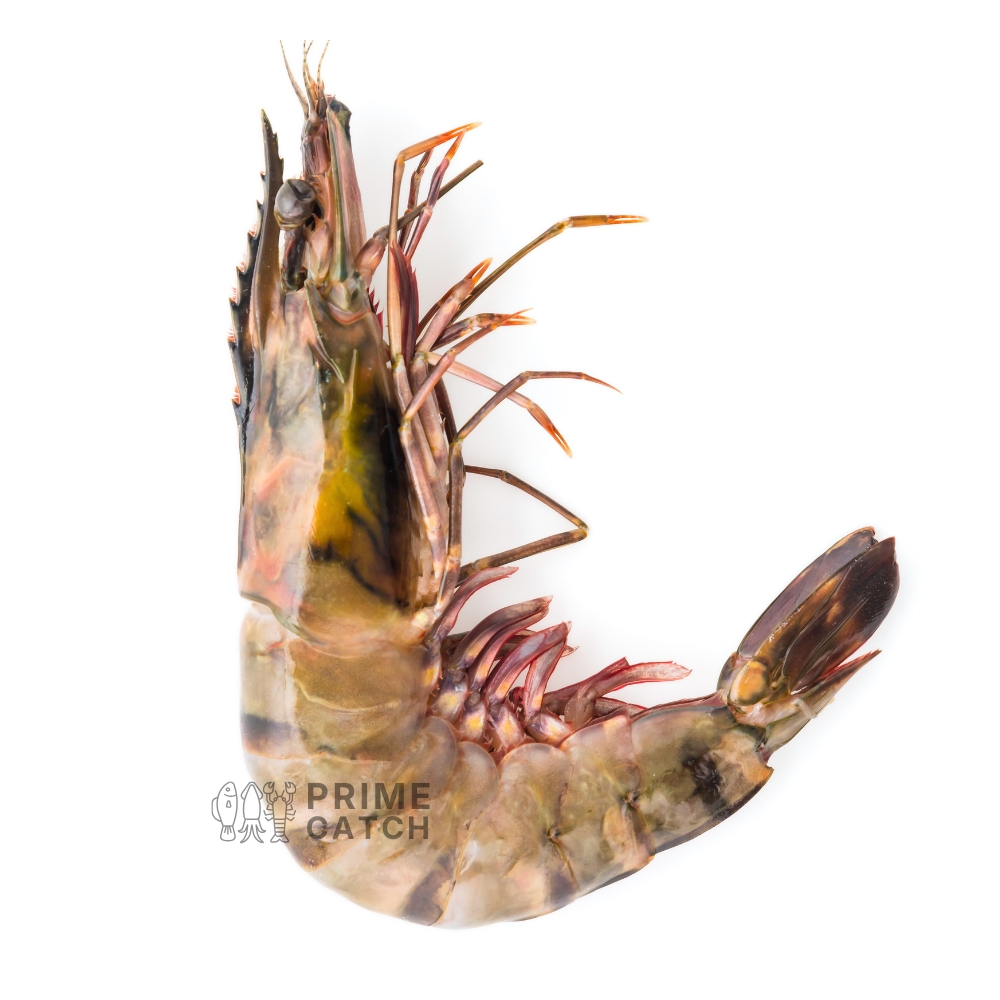
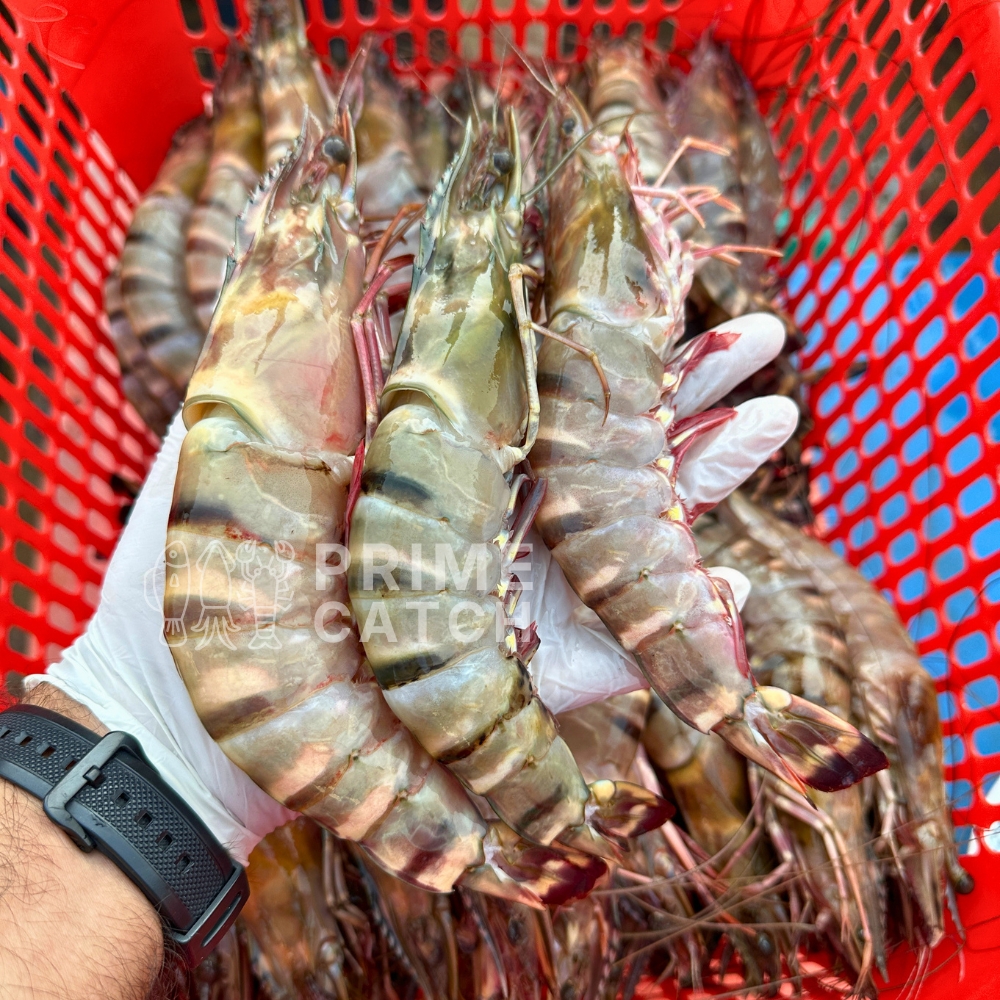
There are prawns. And then there is the Giant Tiger Prawn. Among the great crustaceans of the Indo-Pacific, Penaeus monodon — the Giant Tiger Prawn — occupies a position of unrivalled prestige. At Prime Catch, we source the U8 grade exclusively: fewer than eight specimens per kilogram, each prawn a commanding specimen of considerable size, weight, and culinary authority. These are not the timid, flavourless prawns of supermarket shelving. These are wild creatures, drawn from the living waters of the Arabian Sea off the Makran and Sindh coastlines — untouched by chemical preservatives, never subjected to the thermal brutality of commercial freezing.
What arrives at your table is precisely what the sea surrendered that morning at Karachi Fish Harbor — nothing added, nothing diminished.
Prime Catch’s Giant Tiger Prawn is reserved for those who understand that true luxury in food is not theatre. It is provenance. It is integrity. It is the irreducible difference between something that was caught and something that was merely produced.
Flavor Profile
The Giant Tiger Prawn delivers a flavor experience of rare complexity — one that distinguishes it sharply from the farmed or chemically-treated alternatives that dominate the market.
The dominant note is a deep, briny oceanic sweetness — assertive yet refined, with none of the flat, ammoniacal aftertaste associated with chemically preserved or pond-raised specimens. Beneath that sweetness lies a subtle mineral undertone, a direct expression of the Arabian Sea’s rich, saline terroir. The finish is clean and long, with a faint savouriness reminiscent of the finest langoustines of the Scottish Highlands or the red prawns of Mazara del Vallo.
The texture is the crowning attribute: a firm, substantial snap on the bite — often described by Michelin-starred chefs as “toothsome” — that yields to a luxuriously juicy, almost buttery interior. This textural integrity is the hallmark of wild-caught, fresh-only product and is irreproducible in frozen or chemically preserved alternatives.
The shell, when grilled over live flame, releases an extraordinary aromatic compound that elevates any preparation to a distinctly haute level.
Habitat
The Giant Tiger Prawn inhabits the warm, shallow coastal waters of the Indo-Pacific — from the eastern coasts of Africa across the Indian subcontinent to Southeast Asia and northern Australia. In Pakistan, the species thrives in the nutrient-dense, sediment-rich estuarine zones of the Sindh and Balochistan coastlines, particularly in the mangrove-fringed tidal flats adjacent to the Indus Delta and along the deeper offshore channels of the Makran Coast.
The Arabian Sea, fed by the seasonal southwest monsoon and enriched by significant upwelling of cold, nutrient-laden deep water, provides an exceptional natural habitat — one that produces larger, more robust specimens than many other regional fisheries. The wild prawn of these waters forages freely on organic matter, small crustaceans, and marine invertebrates, resulting in the characteristic richness and complexity of flavour absent in controlled aquaculture environments.
Prime Catch sources exclusively from artisanal and semi-industrial fishing vessels operating within sustainable catch zones — ensuring that every prawn reaching you is a genuine product of the open sea.
Taxonomy
| Classification Level | Detail |
|---|---|
| FAO Name | Giant Tiger Prawn |
| Scientific Name | Penaeus monodon (Fabricius, 1798) |
| Common Names | Black Tiger Prawn, Giant Tiger Prawn, Jumbo Tiger Prawn |
| Phylum | Arthropoda |
| Class | Malacostraca |
| Order | Decapoda |
| Family | Penaeidae |
| Genus | Penaeus |
| Species | monodon |
| FAO Species Code | PEN |
| IUCN Status | Not Evaluated (wild stocks) |
Penaeus monodon was first formally described by the Danish zoologist Johan Christian Fabricius in 1798 and remains the largest member of the Penaeidae family — the aristocratic lineage from which the world’s most prized commercial prawns descend.
Physical Attributes
| Attribute | Detail |
|---|---|
| Size Grade | U8 (Under 8 pieces per kilogram) |
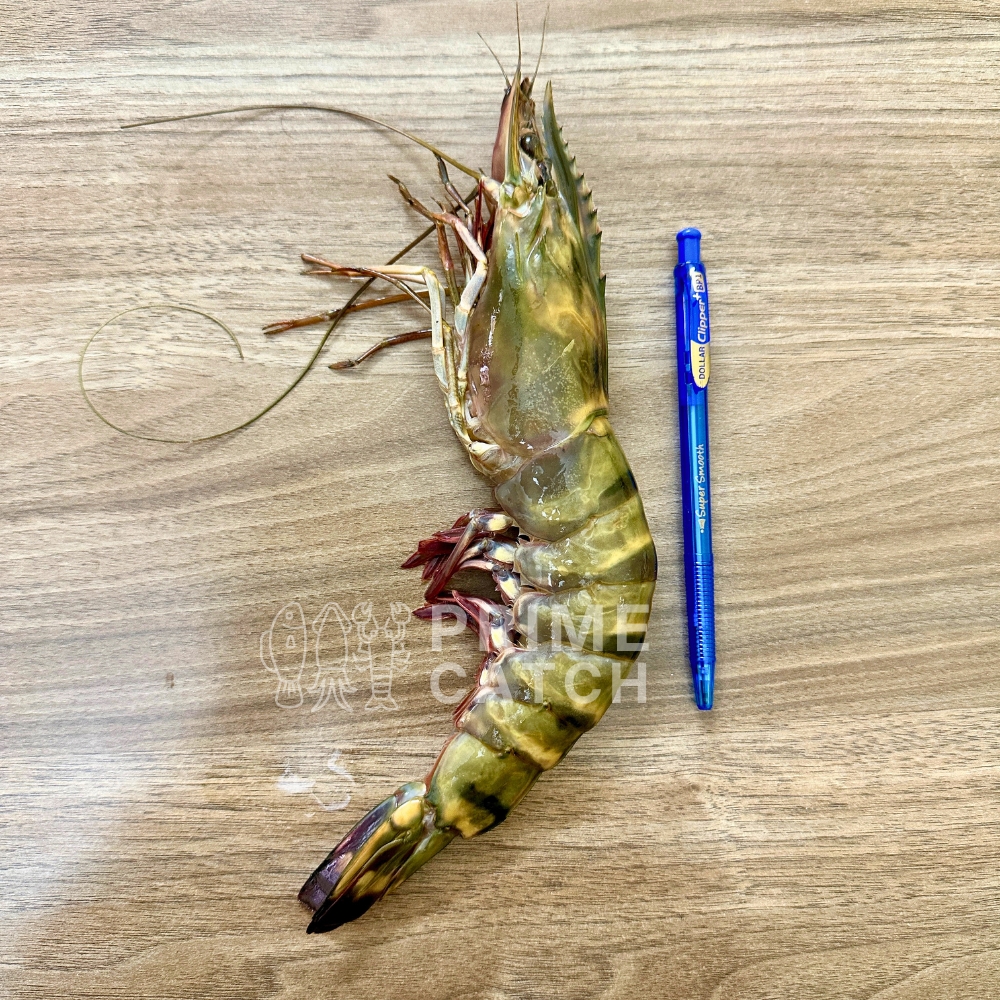
| Average Weight per Piece | 125g – 160g |
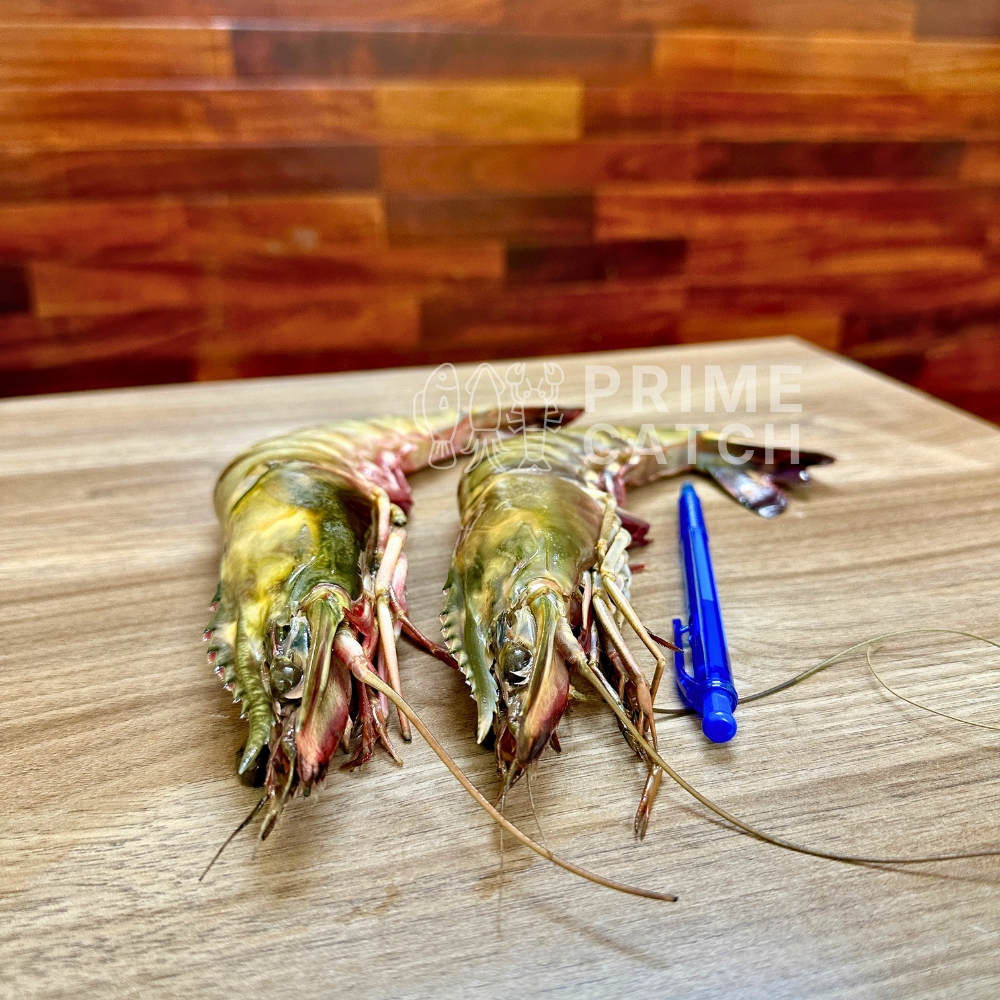
| Average Length | 28 cm – 36 cm (head-on) |
| Shell Colour | Deep blue-black with vivid tiger striping in transverse amber and grey bands |
| Flesh Colour (raw) | Translucent grey-white with a blush of coral at the tail |
| Flesh Colour (cooked) | Brilliant coral-orange with ivory-white interior |
| Texture (raw) | Firm, dense, with tight segmentation |
| Texture (cooked) | Meaty, juicy, with pronounced snap |
| Antennae | Long, fully intact on Prime Catch-grade specimens |
| Roe Presence | Occasionally, in female specimens — considered a premium attribute |
| Presentation | Head-on, shell-on, whole — the mark of unadulterated freshness |
At U8, each Giant Tiger Prawn from Prime Catch is, in practical terms, a full individual portion — a single specimen of sufficient presence to anchor a starter, command a grill plate, or form the centrepiece of a composed plating.
Cooking Preferences — International Fine Dining
The Giant Tiger Prawn’s size, structural integrity, and flavour depth make it one of the most versatile luxury ingredients in professional kitchens across the world.
Europe — Grilled, Seared & Raw Preparations: European fine dining traditions treat the tiger prawn with characteristic restraint — allowing the ingredient itself to lead. Preparations range from the split, shell-on sear over a scorching hot plancha finished with a classic beurre blanc, to the wood-fired whole grill dressed in nothing but cold-pressed olive oil and sea salt. At the most refined end of the European table, the highest-quality specimens are served raw as a crudo — a preparation that speaks directly to Prime Catch’s fresh-only standard, as it is entirely dependent on absolute freshness and zero chemical treatment.
The Americas — Butter-Poached, Blackened & Composed Plates: Across North and South America, the tiger prawn occupies a position of prestige in both fine dining and celebratory home cooking. Butter-poaching — a technique popularised by high-end American kitchens — produces an extraordinarily tender, enriched result that showcases the prawn’s natural sweetness. Southern and Latin American culinary traditions favour bold citrus marinades, live-fire charcoal grilling, and ceviche-style acid cures — all of which the U8 prawn’s structural density handles with distinction.
East Asia — Precision, Purity & High-Heat Technique: East Asian culinary traditions place supreme value on textural integrity and the purity of the primary ingredient — making the wild-caught, chemical-free U8 specimen a natural fit. Preparations include feather-light tempura batter fried at precisely controlled temperatures, salt-grilling over premium hardwood charcoal with citrus accompaniment, and live steaming with aromatics such as ginger and aged rice wine — a method that yields perhaps the clearest, most undisguised expression of the prawn’s oceanic character.
South & Southeast Asia — Aromatic, Coconut & Live-Fire: The cuisines of South and Southeast Asia are arguably the most native to the tiger prawn’s habitat — and their preparations reflect centuries of intimate familiarity with the species. Coconut-based marinades, fresh turmeric, and cold-pressed oils feature prominently, as do high-heat wok preparations with galangal, lemongrass, and wild herbs. The prawn’s firm, dense flesh is uniquely suited to these bold, aromatic cooking environments — retaining structural integrity where smaller or lesser-quality specimens would break down entirely.
The Middle East & Mediterranean — Spiced, Charcoal-Grilled & Mezze-Style: Across the broader Middle East and Mediterranean arc, the tiger prawn is a celebrated centrepiece of the luxury seafood table. Whole charcoal-grilling with regional spice blends, herb-infused olive oils, and preserved citrus is the dominant tradition — a method that rewards the superior shell caramelisation unique to large, wild specimens. Prime Catch’s Giant Tiger Prawn, grilled whole over live coals and presented head-on, is entirely consistent with the finest seafood presentations from Beirut to Muscat to Istanbul.
General Guidance for Home Preparation: Do not overcook. At U8, the prawn requires no more than 2–3 minutes per side over high heat, or 4–5 minutes in a court-bouillon poaching liquor. The greatest error with a premium specimen is excessive heat or time.
Health Benefits
The Giant Tiger Prawn is not merely a culinary indulgence — it is among the most nutritionally concentrated seafood proteins available, combining exceptional macronutrient density with a micronutrient profile of genuine clinical significance.
High-Quality Complete Protein A single U8 Tiger Prawn (approximately 130–150g edible flesh) delivers approximately 28–35g of complete protein — containing all nine essential amino acids in biologically optimal ratios. This makes it one of the most protein-efficient whole foods per calorie available in any cuisine. Reference: WebMD — Health Benefits of Shrimp
Omega-3 Fatty Acids — Cardiovascular & Cognitive Protection Wild-caught marine prawns contain meaningful concentrations of EPA and DHA — the long-chain omega-3 fatty acids linked to reduced cardiovascular inflammation, improved triglyceride profiles, and neuroprotective benefits. Wild specimens, feeding on a natural marine diet, consistently exhibit superior omega-3 profiles compared to farmed counterparts. Reference: Harvard Health Publishing — Omega-3 Fatty Acids: An Essential Contribution
Selenium — Antioxidant & Thyroid Function The prawn is one of the richest dietary sources of selenium — a trace mineral of considerable importance in the neutralisation of oxidative free radicals, immune system modulation, and thyroid hormone synthesis. A single serving can provide 40–60% of the recommended daily intake. Reference: Mayo Clinic — Selenium
Iodine — Essential Thyroid Micronutrient As a marine species, Penaeus monodon accumulates dietary iodine — a mineral largely absent from inland food sources and essential for healthy thyroid function, metabolic regulation, and foetal neurological development. Reference: Harvard Health Publishing — Iodine Deficiency
Choline — Brain and Liver Health Often overlooked, choline is an essential nutrient found in concentrated quantities in crustaceans. It plays a critical role in cell membrane integrity, neurotransmitter synthesis (acetylcholine), and liver lipid metabolism. Reference: WebMD — What is Choline?
Low in Saturated Fat — Cardiovascular-Friendly Protein Despite its richness of flavour and texture, the Giant Tiger Prawn is remarkably lean — low in total fat and exceptionally low in saturated fat. It is considered a heart-healthy protein source by major nutritional authorities when consumed as part of a balanced diet. Reference: Mayo Clinic — Dietary Fats
Astaxanthin — The Longevity Antioxidant The characteristic coral-orange colour of cooked prawn flesh is attributable to astaxanthin — a potent marine carotenoid antioxidant with emerging evidence supporting anti-inflammatory, skin-protective, and mitochondrial health benefits. Wild-caught prawns contain significantly higher astaxanthin concentrations than farmed specimens fed synthetic pigmentation. Reference: Healthline — 7 Impressive Benefits of Astaxanthin
A Note on Prime Catch Standards
Every Giant Tiger Prawn bearing the Prime Catch name is:
- Wild-caught from the Arabian Sea — never pond-raised or aquaculture-produced
- Fresh, never frozen — processed and delivered within hours of landing
- Chemical-free — zero sodium metabisulfite, sodium tripolyphosphate, or any preservative treatment
- U8 grade guaranteed — no filler sizing, no grade mixing
- Head-on, shell-on — the internationally recognised presentation standard for premium whole prawns
Prime Catch. For those who accept no substitution.
Reviews
There are no reviews yet.